What a Toxic Boss Actually Costs the Company

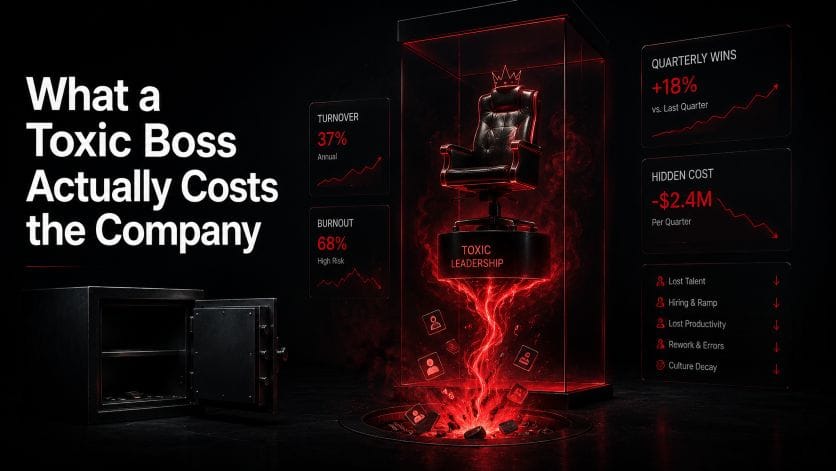
Corporate culture treats toxicity like bad weather. You are supposed to endure it, drink chamomile, talk to a therapist, or build personal boundaries. Walk past any smoking area or coffee machine today and the default question is almost always, what brand of magnesium are you taking?
Nonsense.
A toxic manager is unpredictable friction and constant low-level psychosis. You never know when the honey badger will flip into full storm mode or who gets caught in the blast radius this week. At the exact same time, it is a massive, predictable cash drain. Tangible, measured in serious money, except accounting stubbornly dumps it into general overhead.
Take a real example from daily operations.
A revenue management team of twenty people. Every single year, at least four specialists quit. Four replacements come in, getting slowly dragged through the company setup. They have to master complex industry software, learn internal workflows, make expensive mistakes. The company spends massive resources keeping that carousel spinning. The root cause is always the same, perpetual fire drills where everything was needed yesterday, paired with zero career growth.
Calculating the direct loss is simple enough. Replacing a competent specialist in today's market costs anywhere from half to double their annual salary. Pay the recruiters, freeze key deliverables for three months, drag the rest of the team through endless interviews. Then spend another six months watching the replacement learn the infrastructure and press the wrong buttons.
The money was simply burned. The executive dashboard, however, remains calm. No CFO will walk into the board meeting to report that a department lead blew several million just to assert dominance during weekly check-ins.
Those who stay stop trying.
A burned-out employee does not resign overnight. First, they shut the laptop in their head. They stop arguing, stop suggesting improvements, delay email replies by a day, and quietly call in sick. They occupy a chair, pull a full paycheck, but deliver about a third of their capacity. The payroll department covers that too.
Bare minimum, nothing more.
Why do companies leave these managers untouched for years?
Because in the short run, they are wildly convenient.
That manager delivers immediate numbers. They do not care about the team, they squeeze people dry, ask zero questions of executive leadership, and force the quarterly target across the line. A triumphant slide deck goes upstairs. Targets hit, plans exceeded, we have even more ambitious ideas for next quarter, the board applauds, and executive bonuses clear the bank.
The fact that the department will be a smoking crater nine months from now bothers nobody in the room today.
By the time the department collapses and recruiting invoices spike, that manager will either secure a promotion off their stellar numbers or jump to another company with a spotless resume. Cleaning up the rubble falls to whoever steps in next.
The entire corporate ladder was built this way. The people at the top went through the exact same meat grinder twenty years ago. To them, screaming in a meeting is not bad management, it is just regular Tuesday operations.
Childish advice about walking into HR with a documented paper trail is useless. HR exists to protect the corporate entity from liability, not to balance the scales of justice. As long as the manager hits quarterly targets, internal complaints will be dismissed as individual weakness and inability to handle pressure.
You cannot fix that machine.
If you find yourself inside that meat grinder, do not burn your health trying to rescue someone else's business. The only rational move is to look for another position. Do it on the move, while you still have energy and a clear head, before somebody else's quarterly bonus consumes your remaining nerves.